

Child proofing Your Home with Mounting and Assembly Help
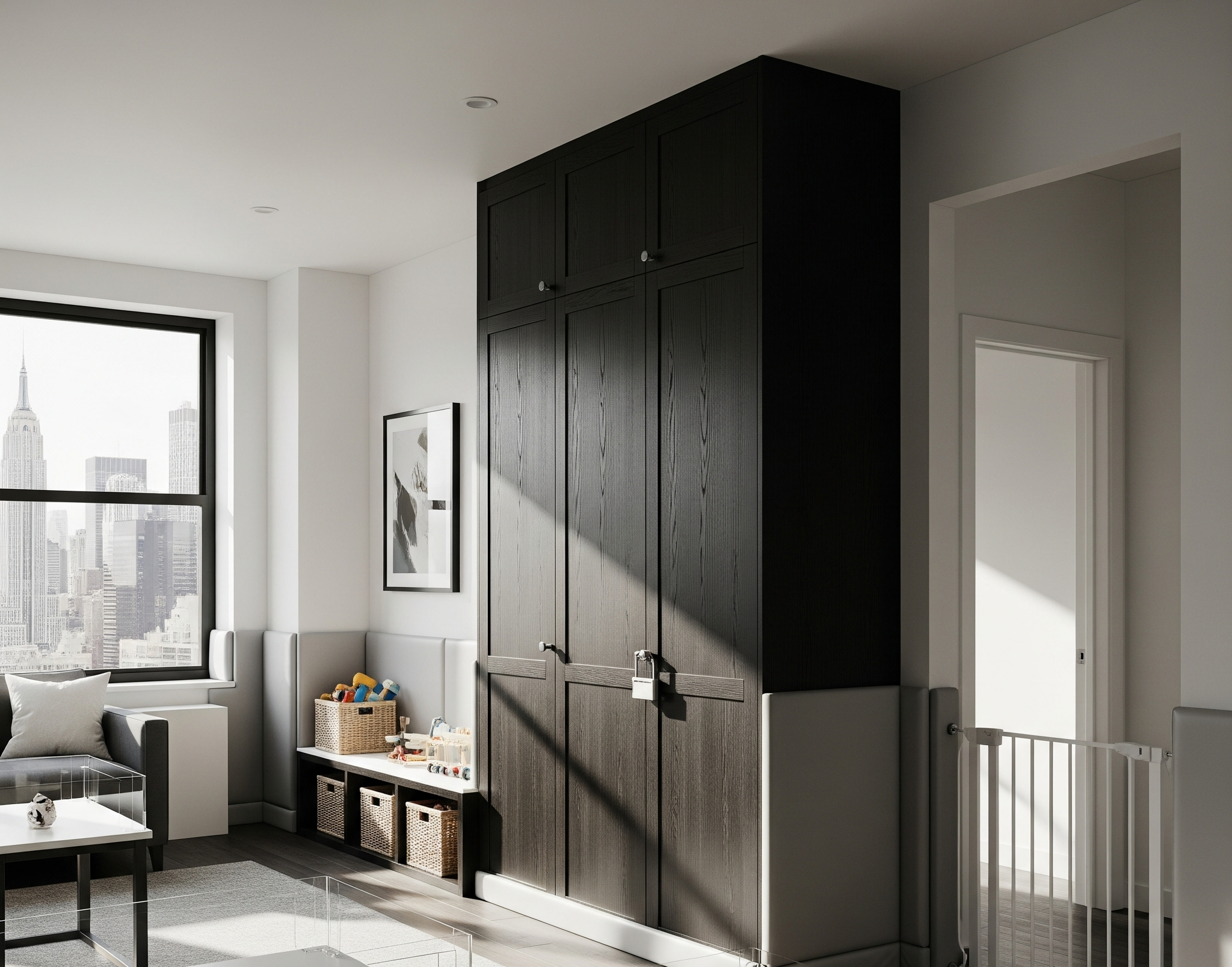
If you have young children and live in a New York City apartment, childproofing is about more than outlet covers and cabinet locks. NYC apartments are dense by design — tall bookcases crammed into pre-war alcoves, wardrobes stacked floor to ceiling, dressers balanced on uneven hardwood floors. One curious toddler can turn any of these into a dangerous situation in seconds. The good news is that professional mounting and assembly services can eliminate most of these risks in a single afternoon visit.
Why NYC Apartments Are Especially Risky for Young Children
Unlike suburban homes with wide open floor plans, New York City apartments are built to maximize every square foot. That means tall storage solutions, floating shelves loaded with books, and furniture wedged into corners with no room to safely tip. The National Safety Council reports over 40,000 tip-over injuries annually in the US, with young children disproportionately affected. In NYC, where the average apartment is under 900 square feet, the density of heavy furniture creates a uniquely dangerous environment.
Pre-war buildings in Manhattan, Brooklyn, and the Bronx often have high ceilings — nine, ten, even twelve feet — which means taller wardrobes and bookcases, and more force when they fall. Loft-style apartments in Williamsburg or Greenpoint may have open mezzanines that require properly installed baby gates. A six-drawer dresser doesn’t need much of an angle to tip onto a toddler, and in a compact NYC apartment, there’s rarely enough floor space to create a safe buffer zone.
The Furniture Tip-Over Threat: Your Biggest Risk
The most dangerous items in a child-occupied NYC apartment are the tall ones: dressers, wardrobes, bookcases, media consoles, and freestanding shelving units. These need to be anchored to the wall using L-brackets, furniture anchor straps, or anti-tip hardware. Before anchoring, you need to know what kind of wall you’re dealing with — because drilling incorrectly means the anchor may fail exactly when you need it most.
Here’s a breakdown of wall types common in NYC apartments:
- Drywall (post-war buildings, 1950s to present): Soft and hollow between studs. Requires stud-finding and either stud anchors or heavy-duty hollow wall anchors rated for the furniture’s weight.
- Plaster over lath (pre-war buildings): Harder and more brittle than drywall. Requires specific drill bits and toggle bolts — standard drywall anchors will crack through plaster under load.
- Concrete or cinderblock (older buildings and ground-floor units): Requires a hammer drill and masonry anchors. Not a DIY job, and incorrect drilling can weaken structural integrity.
- Exposed brick (Brooklyn loft conversions and older Manhattan walk-ups): Beautiful but requires masonry anchors and knowledge of how to drill between mortar joints without crumbling the brick face.
A professional installer can identify your wall type, locate studs or solid anchor points, and install hardware that holds under real stress — not just on installation day.
Cabinet Latches, Baby Gates, and Assembly Safety
Beyond furniture anchoring, childproofing an NYC apartment involves several other mounting and assembly tasks that are easy to get wrong:
- Cabinet locks: NYC kitchens typically have floor-to-ceiling cabinet runs. Magnetic cabinet locks or spring-loaded latches can be installed quickly across an entire kitchen, preventing access to cleaning supplies, sharp objects, and breakables.
- Baby gates: Pressure-mounted gates work for most standard doorways, but if your apartment has an open staircase, a sunken living room, or a loft-style upper level, you need a hardware-mounted gate bolted securely into the wall or doorframe. These must be properly installed to actually function as a safety device.
- Baby furniture assembly: Flat-pack cribs, changing tables, bassinets, and high chairs all need to be assembled precisely. Improperly assembled baby furniture — a wobbly crib rail, a loose changing table strap anchor — is a serious injury hazard. Professional assembly ensures all joints are tight, all safety hardware is correctly torqued, and the product meets the manufacturer’s specifications.
Check Your Building Rules Before You Drill
Many NYC rental buildings require written permission from building management before any anchoring work begins. Before starting any childproofing installation, check your lease and speak with your superintendent. Under NYC Housing Maintenance Code, landlords are generally required to accommodate childproofing requests — and in many cases, they are legally required to install window guards if children under ten live in the unit. A professional installer can document all work with before-and-after photos, protecting you when it comes time to settle the security deposit.
One Visit Is All It Takes
Parents often delay childproofing because it feels like a big project. In reality, a professional handyman can anchor your major furniture pieces, install cabinet locks throughout the kitchen, set up hardware-mounted baby gates, and assemble remaining baby furniture — all in a single two-to-three-hour visit. For a New York City apartment, that’s about as efficient as home improvement gets.
Ready to childproof your NYC apartment the right way? Book a consultation with Picture Perfect Mounting at pictureperfectmounting.com.