

Air Conditioning Replacement – When To Switch
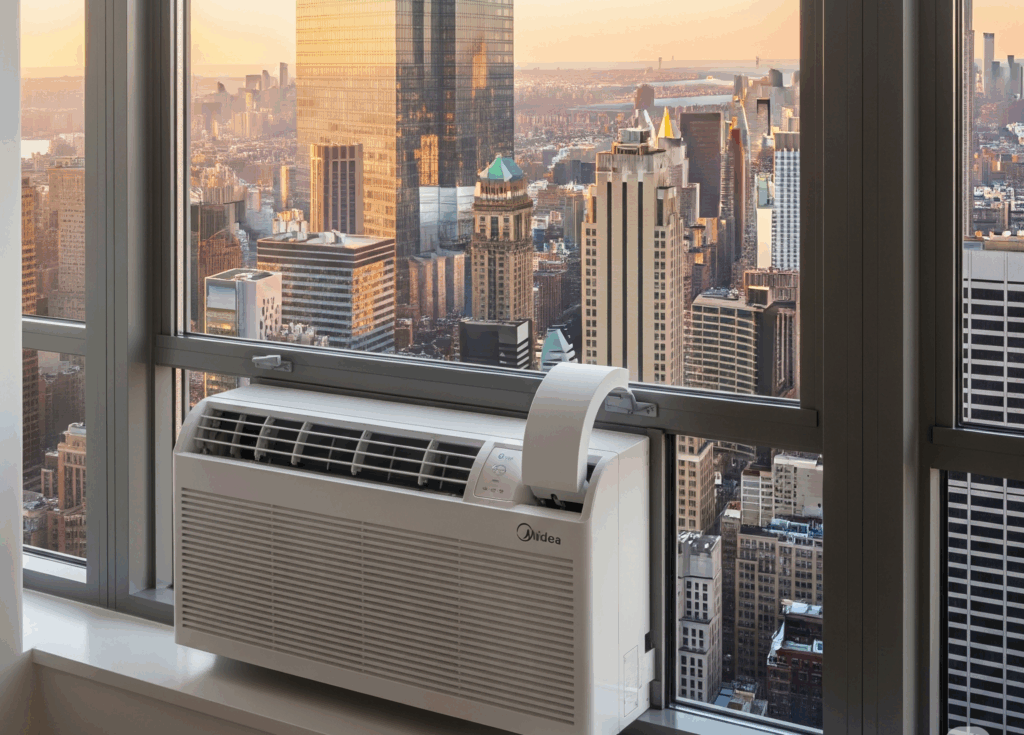
As a New York City handyman, I’ve seen it all when it comes to window air conditioners — units from the late 1990s still running on borrowed time, brand-new units that were installed so poorly they failed in their first summer, and every variation in between. The question I get most often isn’t “what unit should I buy” — it’s “how do I know when it’s time to replace mine?” In NYC apartments, that question has a different answer than it does anywhere else in the country.
How Long Should a Window AC Unit Really Last in NYC?
The standard answer from manufacturers is 10 to 15 years. The honest real-world answer for a New York City apartment is closer to 8 to 10 years — if you take good care of the unit. Summer in New York is brutally hot and humid. Unlike homeowners in the suburbs who store their window units in a basement or garage over the winter, most NYC apartment dwellers leave their AC in the window year-round — because removing and reinstalling a heavy unit twice a year in a walk-up building is a significant ordeal, and storage space in NYC apartments simply doesn’t exist.
That means your unit faces winter cold, wind, rain, and the freeze-thaw cycle for six to seven months out of every year, even while it’s not running. The same freeze-thaw action that cracks sidewalks in February does slow damage to the coils, seals, drain pan, and housing of a unit left in a window all winter. On top of that, city air contains more particulates, cooking grease, soot, and construction dust than suburban air — filters clog faster, airflow restriction stresses the compressor harder, and the internals accumulate grime that reduces efficiency well before manufacturer-estimated end of life.
Warning Signs Your Unit Needs Replacing
Don’t wait until your AC fails during an August heat wave, when every replacement unit in the city is sold out and delivery wait times stretch to ten days. Watch for these signs that replacement is coming:
- Reduced cooling output: If the unit runs continuously but the room never gets comfortable, the compressor is losing efficiency. This is the most common sign of an aging unit and the one most people ignore the longest.
- Unusual noises: Rattling, grinding, clicking, or squealing sounds indicate worn bearings, loose components, or a compressor working harder than it should. These sounds don’t go away on their own.
- Short-cycling: A unit that turns on and off in rapid succession is either the wrong size for the room, low on refrigerant, or has a sensor problem — any of which can signal end of life.
- Water leaking inside: Some condensation on the exterior is normal, but water pooling on your windowsill or dripping into the room means the drainage system is failing.
- Higher energy bills: A compressor working inefficiently draws more electricity for less cooling output. If your Con Edison bill has climbed without any change in habits, your aging AC may be the reason.
- Age over 10 years: Even if it seems functional, a unit over a decade old is operating at significantly lower efficiency than modern Energy Star units. The energy savings from a new unit often offset the purchase price within two to three cooling seasons at NYC electricity rates.
NYC-Specific Factors That Shorten Your AC’s Life
- Year-round window installation: Units that stay in windows all winter take weather damage that units stored indoors never face. If your building allows it and you have the storage space, removing the unit in October significantly extends its lifespan.
- High-particulate air quality: Near major roads, construction zones, or in older buildings with shared exhaust systems, air quality is significantly worse than EPA averages. Filters need cleaning monthly during peak season, not just at the start of summer.
- Improper original installation: A unit installed without a support bracket, with the wrong tilt, or without proper sealing has been under stress since day one. These units tend to fail years earlier than properly installed ones.
How to Dispose of an Old AC Unit in NYC
New York City has specific regulations about disposing of air conditioning units. Federal law under the Clean Air Act requires that refrigerant be professionally removed before any AC unit is discarded — you cannot simply set it on the curb for bulk trash pickup. NYC DSNY offers free CFC removal appointments for residential units, or you can have refrigerant removed by a certified technician at the time of new unit installation. Some retailers will also take old units for recycling when you purchase a replacement. Budget for this step — it adds a small cost and scheduling delay, but it’s required.
What to Look for in a Replacement Unit
When choosing a replacement window AC for an NYC apartment, prioritize Energy Star certification (electricity in New York City is expensive — efficiency pays), compatibility with your specific window type (casement and sliding windows need different units than standard double-hung windows), and whether your building requires specific installation documentation or hardware. If you’re replacing a unit in a pre-war building with non-standard window dimensions, or in a co-op with strict rules about exterior modifications, consulting a professional installer before purchasing saves you from buying the wrong unit.
Ready to replace your old window AC unit before this summer gets away from you? Book a consultation with Picture Perfect Mounting at pictureperfectmounting.com.